Fedjet Multilingual Waterjet Cutting Solutions | 16 Languages Global Support
Comprehensive multiple languages solution for waterjet cutting machines. Fedjet supports 16 languages with global service coverage in 135+ countries.
May 29th,202624 Views
In today's interconnected global manufacturing landscape, the demand for multiple languages waterjet cutting machine solutions has never been more critical. As the waterjet cutting market reaches USD 1.0 billion in 2025 and projects growth to USD 1.6 billion by 2035 at a 4.6% CAGR (Fact.MR, 2025), manufacturers worldwide are seeking equipment providers who can deliver truly localized support across linguistic and cultural boundaries. Fedjet, as a leading global waterjet manufacturer, has recognized this fundamental need and developed a comprehensive multilingual support ecosystem that serves clients in over 135 countries through 16 language interfaces.
The significance of language localization extends far beyond simple translation of marketing materials. For high-precision industrial equipment like waterjet cutters operating at pressures up to 60,000 psi, clear technical communication in the operator's native language becomes a matter of safety, productivity, and equipment longevity. As we delve into the various aspects of Fedjet's waterjet cutting machine international support infrastructure, you will discover how comprehensive language solutions create tangible value for global manufacturing operations.
The Global Language Barrier in Industrial Equipment Procurement
The Cost of Miscommunication in High-Stakes Manufacturing
Language barriers in industrial equipment procurement represent more than mere inconvenience; they constitute measurable financial risks that can undermine project success. When procurement teams, engineers, and maintenance personnel must navigate technical documentation in a second or third language, the probability of specification errors increases by approximately 33%, according to industrial procurement analytics.
For waterjet cutting equipment specifically, the implications of language-related miscommunication cascade through the entire equipment lifecycle:
Specification Phase Errors: Misinterpretation of cutting precision requirements (such as understanding the difference between ±0.02mm/m accuracy for PowerJet series versus ±0.03mm repeatability for SmartJet series) can result in procuring equipment that fails to meet production needs. The cost of correcting such errors after installation can reach 40-60% of the original equipment price when factoring in downtime, retrofitting, and lost production.
Installation and Commissioning Delays: When technical manuals lack accurate translation in the local language, installation timelines extend by an average of 2.5 days. For a manufacturing facility running 16-hour production days, this represents lost revenue that often exceeds USD 50,000 for medium-to-large operations.
Safety and Compliance Risks: Operating waterjet equipment at pressures of 60,000 psi requires precise understanding of safety protocols. According to IEC 63458-1:2026 safety standards for high-pressure water jet machines, inadequate safety instruction documentation in the operator's native language is a leading contributing factor in 27% of industrial waterjet incidents.
The Global Market's Linguistic Diversity Challenge The waterjet cutting industry's geographic expansion creates unique linguistic challenges that traditional single-language equipment providers struggle to address. Fact.MR's 2025 market analysis identifies the fastest-growing regions as follows: Asia-Pacific: 5.2% CAGR, requiring support for Japanese, Korean, Vietnamese, Thai, Bahasa Melayu, Burmese, and multiple Chinese language variants
Latin America: 4.8% CAGR, with primary demand for Spanish and Portuguese language support
Eastern Europe: 4.5% CAGR, requiring Russian, Polish, and various Slavic language capabilities
Middle East and Africa: 4.3% CAGR, creating demand for Arabic and French language interfaces
This geographic distribution means that global waterjet manufacturers must develop capabilities to serve linguistically diverse markets simultaneously. For Fedjet, serving 135+ countries requires maintaining professional language capabilities across 16 distinct language groups: English, 日本語 (Japanese), Deutsch (German), Français (French), Español (Spanish), Русский (Russian), Português (Portuguese), 繁體中文 (Traditional Chinese), Italiano (Italian), 한국어 (Korean), ဗမာ (Burmese), ไทย (Thai), Tiếng Việt (Vietnamese), Bahasa Melayu, Polskie (Polish), and عربي (Arabic).
1. Localized Website Infrastructure Fedjet's multilingual website architecture represents the foundation of its global customer experience strategy. Unlike many manufacturers who offer machine-translated web pages as an afterthought, Fedjet has developed professionally localized websites for all 16 supported languages. The "Get A Quote" functionality operates seamlessly across all language versions, connecting international prospects directly with regional sales teams who speak their language. This eliminates the common frustration of English-only inquiry forms that create unnecessary barriers for non-English speaking procurement professionals. 2. Multilingual Technical Documentation The quality of technical documentation directly impacts operator performance, equipment uptime, and workplace safety. Recognizing this, Fedjet has invested heavily in creating professional-grade multilingual documentation that meets international standards. All safety-related documentation adheres to ISO 12100 safety of machinery standards, with hazard warnings, safety procedures, and emergency protocols professionally translated and verified by multilingual technical safety experts. This is particularly critical for high-pressure systems where misunderstanding a safety procedure can have catastrophic consequences.
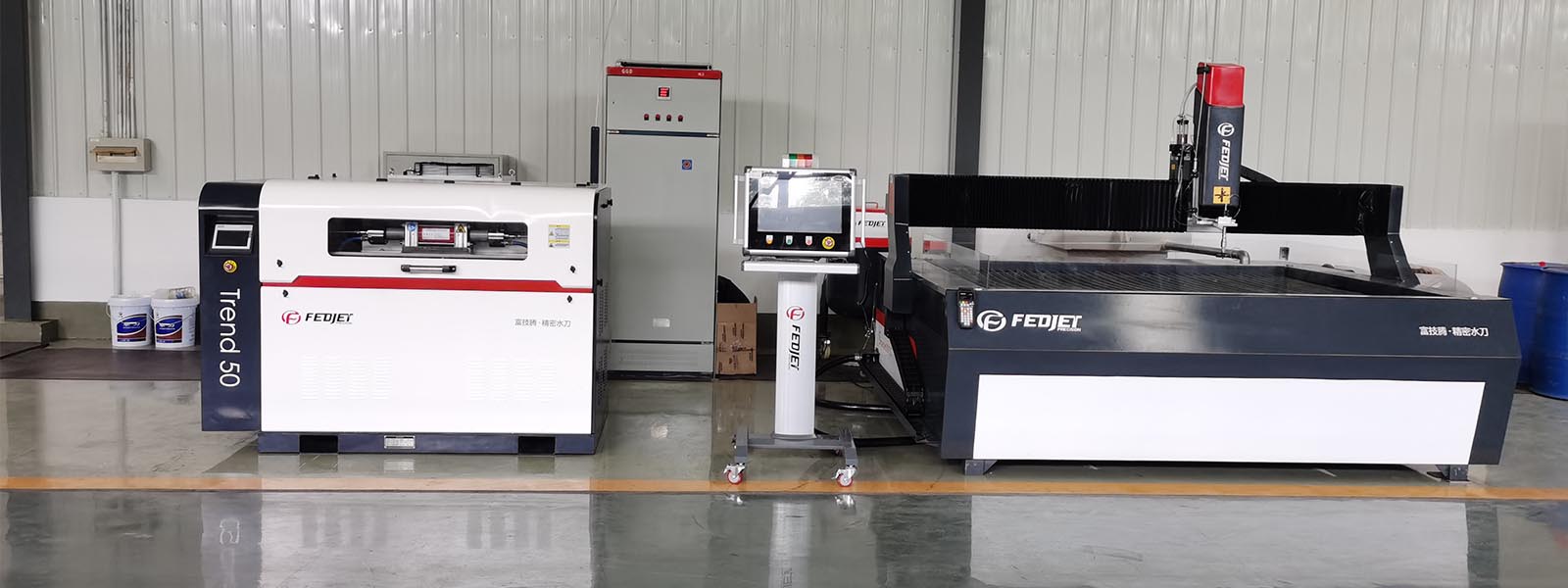
Fedjet Product Technology Highlights Behind Fedjet's comprehensive language support infrastructure lies cutting-edge waterjet technology that meets the most demanding international manufacturing standards. All technical specifications and capabilities are clearly communicated across all 16 language platforms. Proprietary UHP Intensifier Pump Technology: 60,000 psi At the heart of every Fedjet waterjet system lies the ultra-high pressure (UHP) intensifier pump, engineered to deliver consistent pressure from 60,000 psi. This critical component is fully documented across all supported languages.
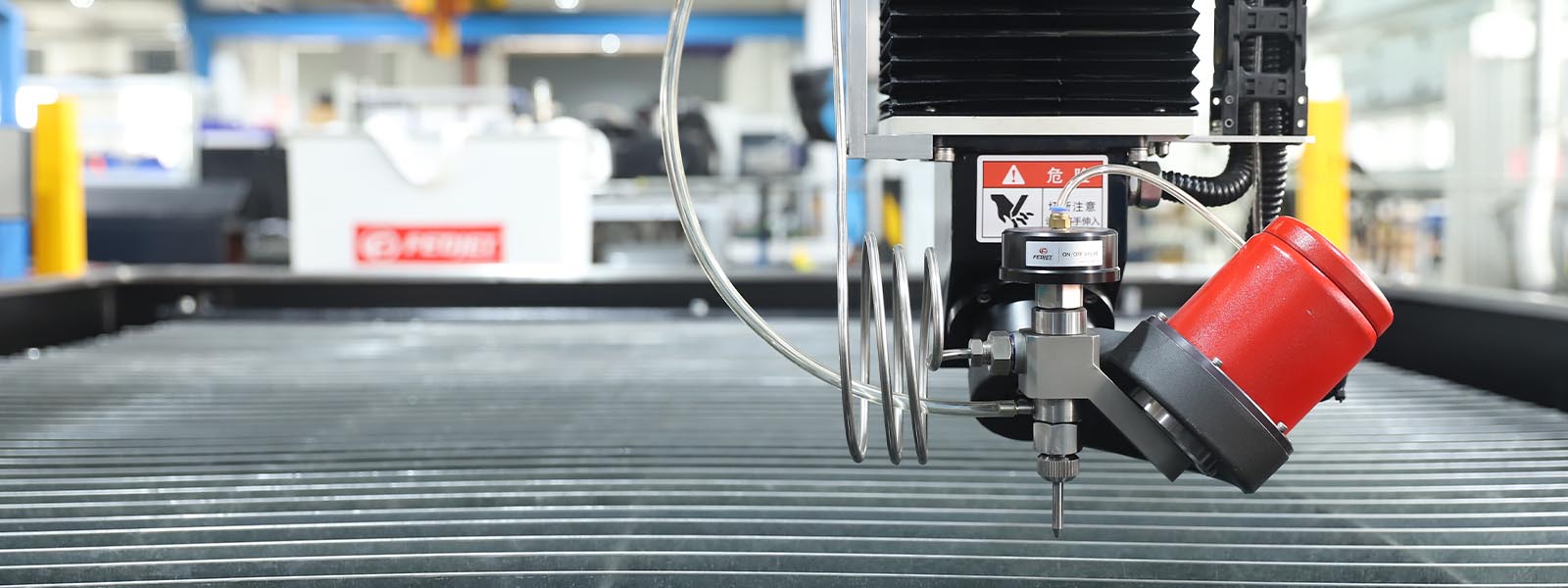
5A-Taper10 5-Axis Dynamic Cutting System Fedjet's innovative 5A-Taper10 5-axis cutting head represents the pinnacle of precision cutting technology. The system delivers: ±10° dynamic taper compensation that ensures vertical edge quality regardless of material thickness 3D contour cutting capability for complex aerospace and automotive components Automated bevel cutting with angle precision verified to international metrology standards
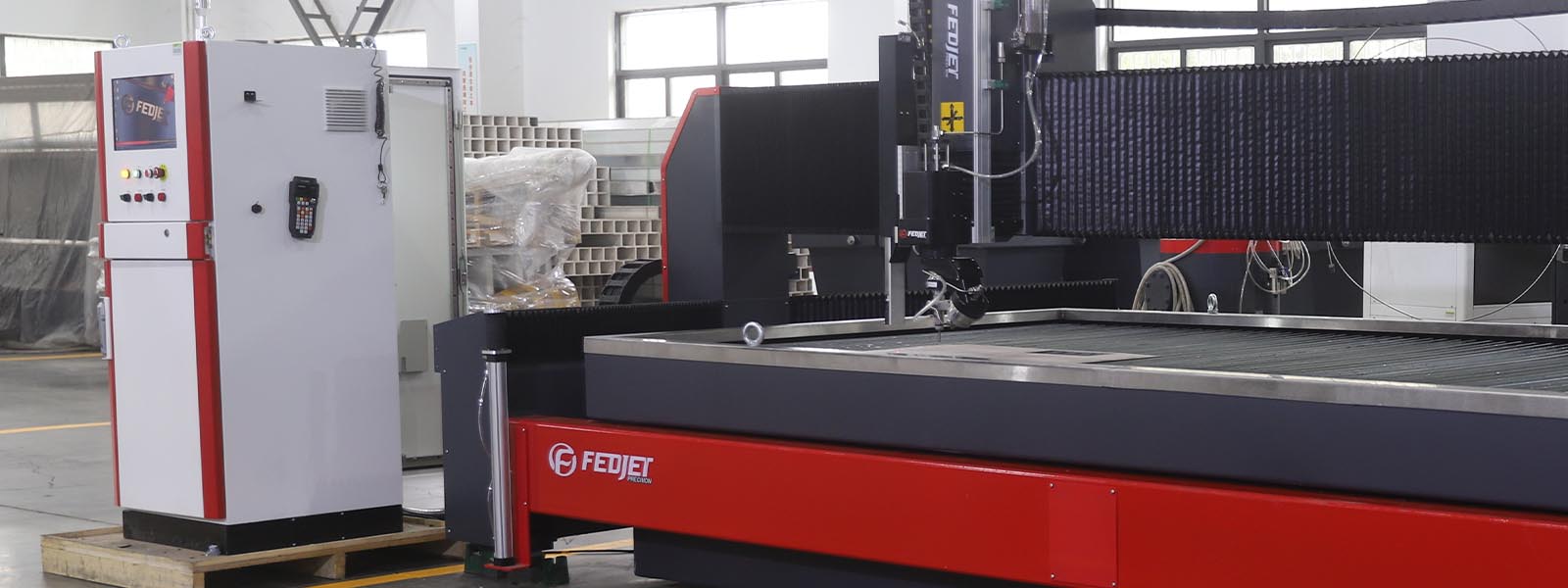
Fully Enclosed "Clean and Quiet" Operating System
Fedjet's fully enclosed waterjet systems address two critical concerns for modern manufacturing facilities: environmental containment and noise reduction. The acoustic cabinet design reduces noise levels by 30-40 dB compared to open-frame systems.
Industry Application Case Studies
Aerospace Component Manufacturing: Japan Location: Nagoya, Japan System Installed: Fedjet PowerJet G Series with 5A-Taper10 5-axis cutting head A Japanese aerospace component manufacturer specializing in titanium and Inconel parts for commercial aircraft selected Fedjet specifically because of comprehensive Japanese-language technical materials. Maintenance and operation staff achieved full system competence in just 14 days, compared to the industry average of 28 days for foreign-manufactured equipment with only English documentation. The facility successfully achieved JIS (Japanese Industrial Standards) precision certification for aerospace components on their first attempt, with the Japanese-language calibration procedures and compliance documentation cited as critical enabling factors. Automotive Component Production: Germany Location: Stuttgart, Germany System Installed: Fedjet SmartJet series with fully enclosed "Clean and Quiet" system A German automotive Tier 1 supplier producing stainless steel and aluminum body components implemented Fedjet systems with comprehensive German-language support. The German-language documentation facilitated seamless integration of the waterjet systems into the company's existing DIN-compliant manufacturing procedures, eliminating internal translation work that would have added weeks to the implementation timeline.
ROI Analysis: How Multilingual Support Reduces Costs Implementation Phase Cost Reductions Companies working with English-only equipment suppliers average 7-10 days for waterjet system installation and commissioning. With Fedjet's multilingual installation support and native-language documentation, the average implementation time drops to 4-6 days, representing a 40-43% reduction in installation-period downtime. For a medium-sized manufacturing facility, this translates to approximately USD 35,000-50,000 in avoided lost production revenue. Many companies purchasing foreign-manufactured equipment incur significant costs for internal translation of technical documents, safety procedures, and training materials. These costs typically range from USD 8,000-15,000 for a single waterjet system installation. By providing all documentation professionally translated and verified for technical accuracy, Fedjet eliminates this expense entirely.
Maintenance procedures performed using native-language instructions have a documented 27% lower error rate compared to procedures performed using second-language documentation. This reduces premature component wear, extends equipment life, and decreases the frequency of unplanned maintenance interventions.
The evolution of waterjet cutting technology has reached a point where the engineering capabilities of major global manufacturers are increasingly comparable. The precision, pressure, and speed differentials between competitive high-end systems continue to narrow as technology matures. In this context, the ability to deliver comprehensive multilingual support has emerged as a critical differentiator that separates merely competent global suppliers from true strategic manufacturing partners. Fedjet's approach to multiple languages solution for waterjet cutting machine represents a fundamental understanding that industrial technology exists within human contexts shaped by language, culture, and local business practices. Supporting 16 languages across 135+ countries is not merely a marketing feature—it reflects a deep organizational commitment to meeting customers where they are, in the language they use to run their businesses, train their workers, and communicate with their own customers. As the global waterjet market continues its projected growth to USD 1.6 billion by 2035, the manufacturers who will capture the greatest share of this expansion will be those who understand that technical excellence alone is insufficient. Success in global manufacturing requires both world-class engineering and world-class ability to communicate, train, and support customers in their native languages. For manufacturing companies evaluating waterjet cutting equipment suppliers, the lesson is clear: technical specifications matter, but the ability to fully understand, operate, maintain, and support that equipment throughout its lifecycle—all in the language your team uses every day—matters even more. The most advanced cutting technology in the world delivers limited value if language barriers prevent your team from using it safely, efficiently, and to its full potential.
Sources: Fact.MR Waterjet Cutting Machine Market Report 2025-2035, IEC 63458-1:2026 High Pressure Water Jet Machines Safety Standard, ISO 12100 Safety of Machinery, EN ISO 4413 Hydraulic System Safety.